

1. AI-Powered Dynamic Reporting with Mendix GenAI
Dynamic Reporting with Mendix GenAI transforms the way organizations create and consume business reports by allowing users to generate insights using natural language. Instead of relying on predefined report templates, users can simply describe the information they need and receive customized reports instantly. This reduces dependency on technical teams and improves access to business intelligence.
By combining Mendix with advanced large language models (LLMs), organizations can create reporting experiences that adapt to changing requirements in real time. Reports become more flexible, interactive, and user-focused, enabling faster decision-making. This modern approach helps businesses unlock greater value from their data while improving overall operational agility.
2. Overcoming Traditional Reporting Challenges
Traditional reporting solutions often require developers to design report templates, build logic, and implement every requested modification. As business requirements evolve, organizations must repeatedly invest time and resources to update reports. This process can slow down innovation and delay access to critical information.
The heavy reliance on technical teams creates bottlenecks and increases development costs over time. Many organizations resort to exporting data into external tools for analysis, which introduces additional complexity and governance challenges. AI-powered reporting addresses these limitations by enabling more flexible and self-service reporting experiences.
3. Agentic AI for Intelligent Report Generation
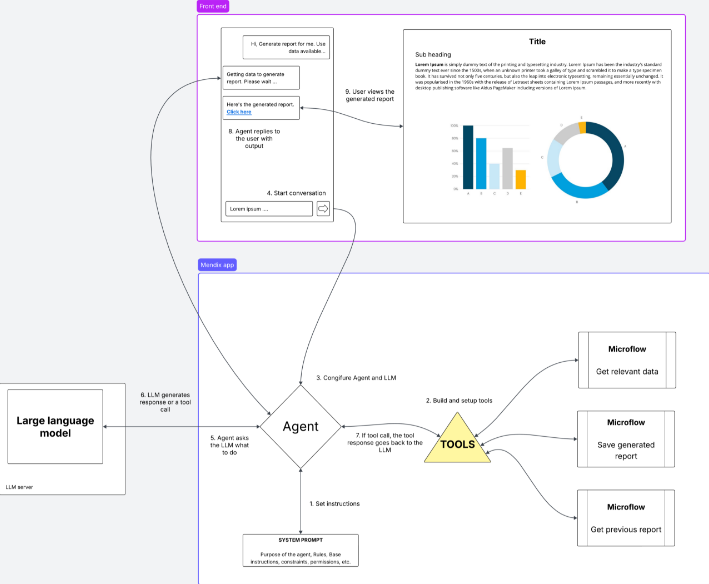
Mendix GenAI introduces intelligent AI agents capable of handling reporting requests through conversational interactions. These agents can interpret user instructions, retrieve relevant business data, and generate meaningful reports without requiring manual report development. Users can interact with reports as naturally as they would with a business analyst.
Beyond generating reports, AI agents can answer follow-up questions and provide deeper insights based on the available data. This creates a more engaging and dynamic reporting experience that goes beyond static dashboards. Organizations gain the ability to explore information faster and uncover insights through natural conversations.
4. Fully Formatted HTML Reports in Real Time
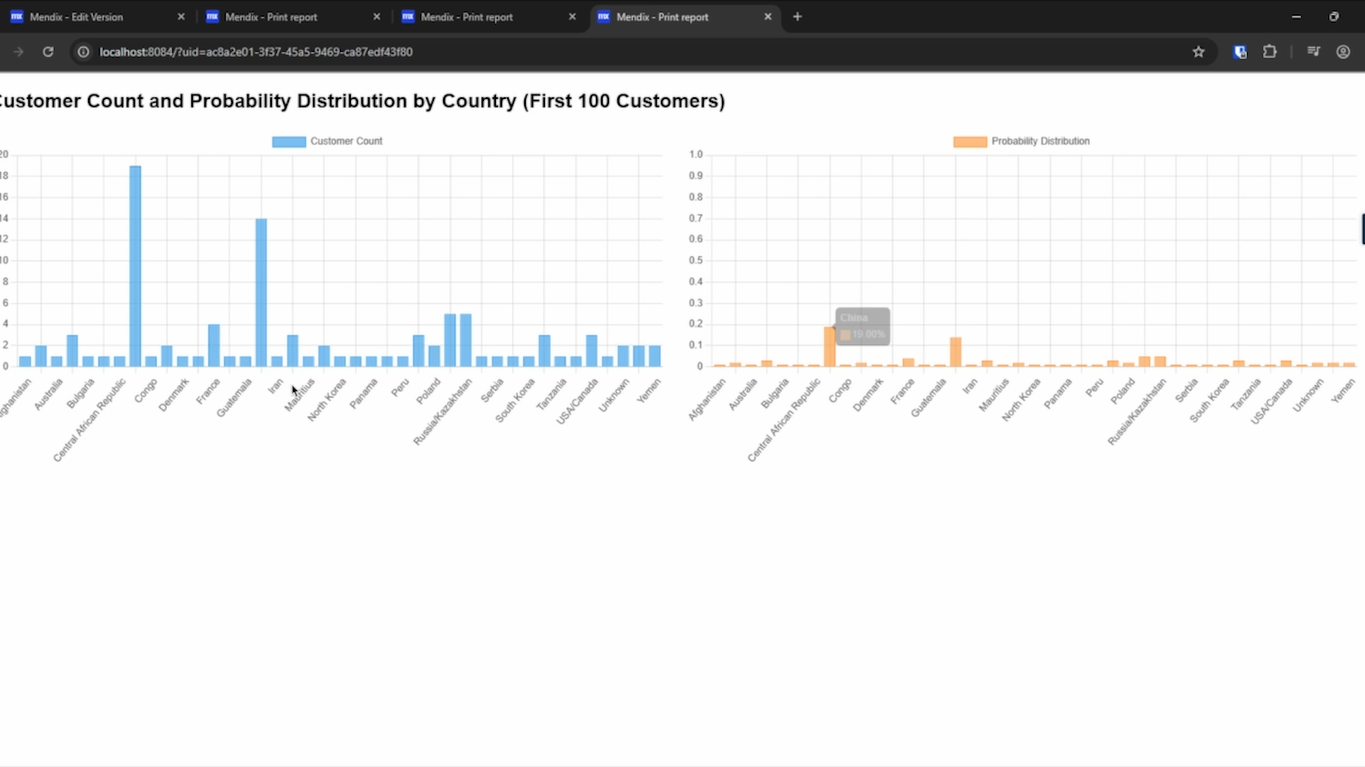
The solution automatically generates complete HTML reports that include formatted content, charts, tables, and visual insights. These reports are created dynamically based on user instructions and can be rendered directly within Mendix applications. This enables a seamless reporting experience without requiring external reporting platforms.
Generated reports can also be stored for future reference and exported into formats such as PDF for sharing and compliance purposes. Users benefit from professional-looking reports that are available immediately upon request. This combination of automation and accessibility significantly improves reporting efficiency across the organization.
5. Publishing Business Data Through APIs
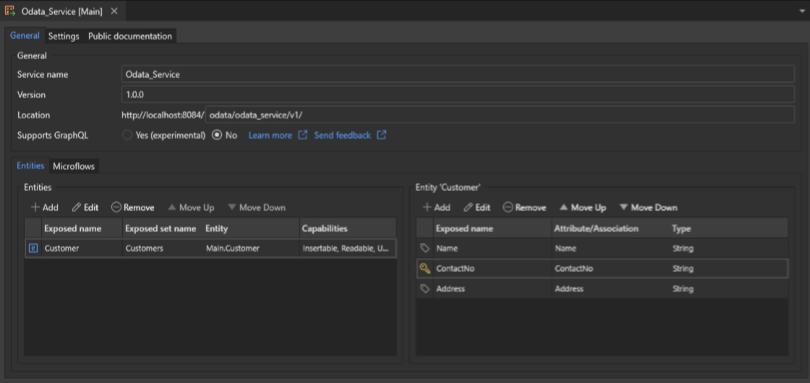
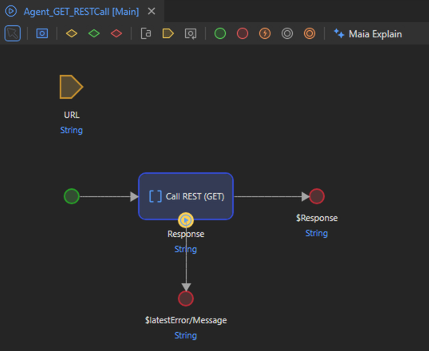
To support dynamic reporting, business data is securely exposed through APIs that can be accessed by AI agents during report generation. In the demonstrated solution, customer records were published using OData services, allowing real-time access to relevant information. This ensures that reports are always generated from the latest available data.
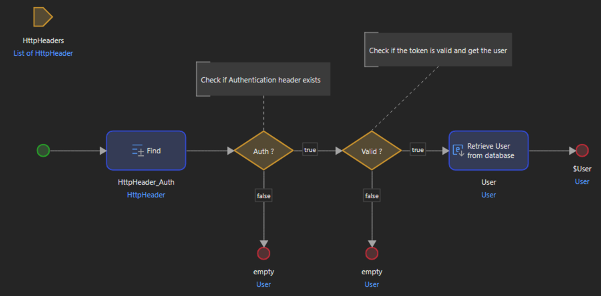
API-driven data access enables organizations to connect multiple business systems to their reporting environment. Secure authentication methods help protect sensitive information while maintaining accessibility for approved reporting workflows. As a result, businesses can create more comprehensive and accurate reports using live enterprise data.
6. Microflows that Power Dynamic Reporting
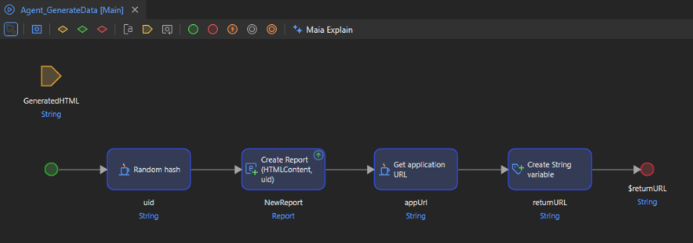
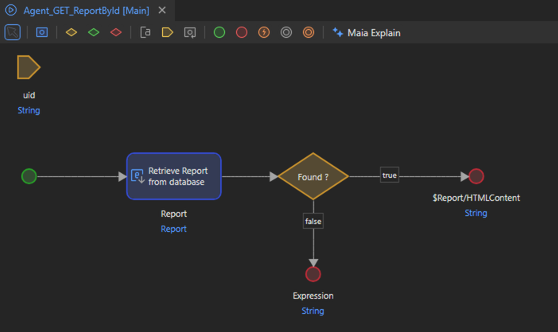
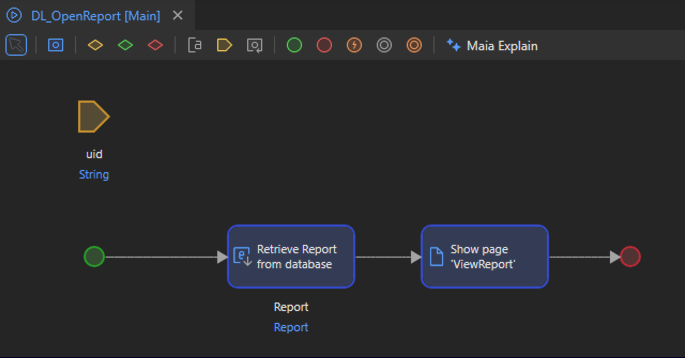
The reporting solution relies on a set of lightweight Mendix microflows that manage key operational tasks behind the scenes. These microflows handle REST-based data retrieval, report generation, report storage, and URL creation for accessing completed reports. Together, they provide the automation needed to support dynamic reporting experiences.
By leveraging reusable microflows, developers can implement powerful reporting capabilities with minimal custom development. Existing business logic and data sources can be integrated quickly into the reporting workflow. This approach reduces implementation effort while providing a scalable foundation for future reporting enhancements.
7. Interactive Report Viewing Experience
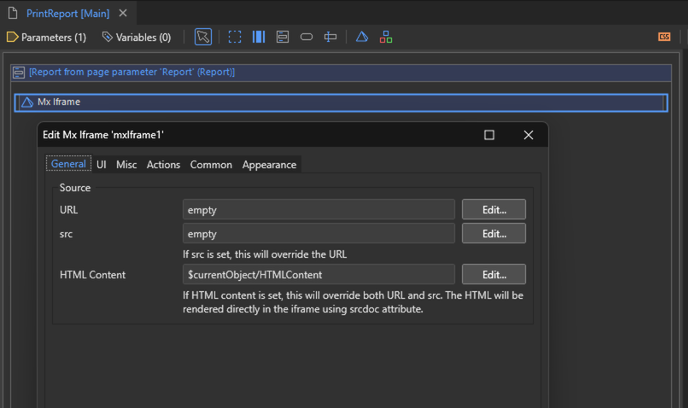
Generated reports are displayed directly inside Mendix applications using an iframe-based viewing page. This allows users to access reports within the same application environment without switching between multiple tools. The embedded experience creates a smoother and more productive workflow for business users.
Users can view, analyze, and interact with reports in real time while maintaining a familiar application interface. Reports remain accessible through generated URLs, enabling easy sharing and retrieval. This integrated viewing experience enhances usability and encourages broader adoption of reporting capabilities across teams.
8. AI Agent Configuration and Tool Integration
The solution leverages configurable AI agents that can access data sources, generate reports, and manage report storage through specialized tools. Developers define the tools available to the agent, ensuring that reporting processes follow established business rules and governance requirements. This creates a secure and controlled AI environment.
By integrating tools directly into the agent workflow, organizations can automate complex reporting tasks with minimal manual intervention. AI agents become capable of performing multiple actions during report generation while maintaining consistency and reliability. This improves efficiency and expands the range of reporting use cases that can be supported.
9. The Power of System Prompts
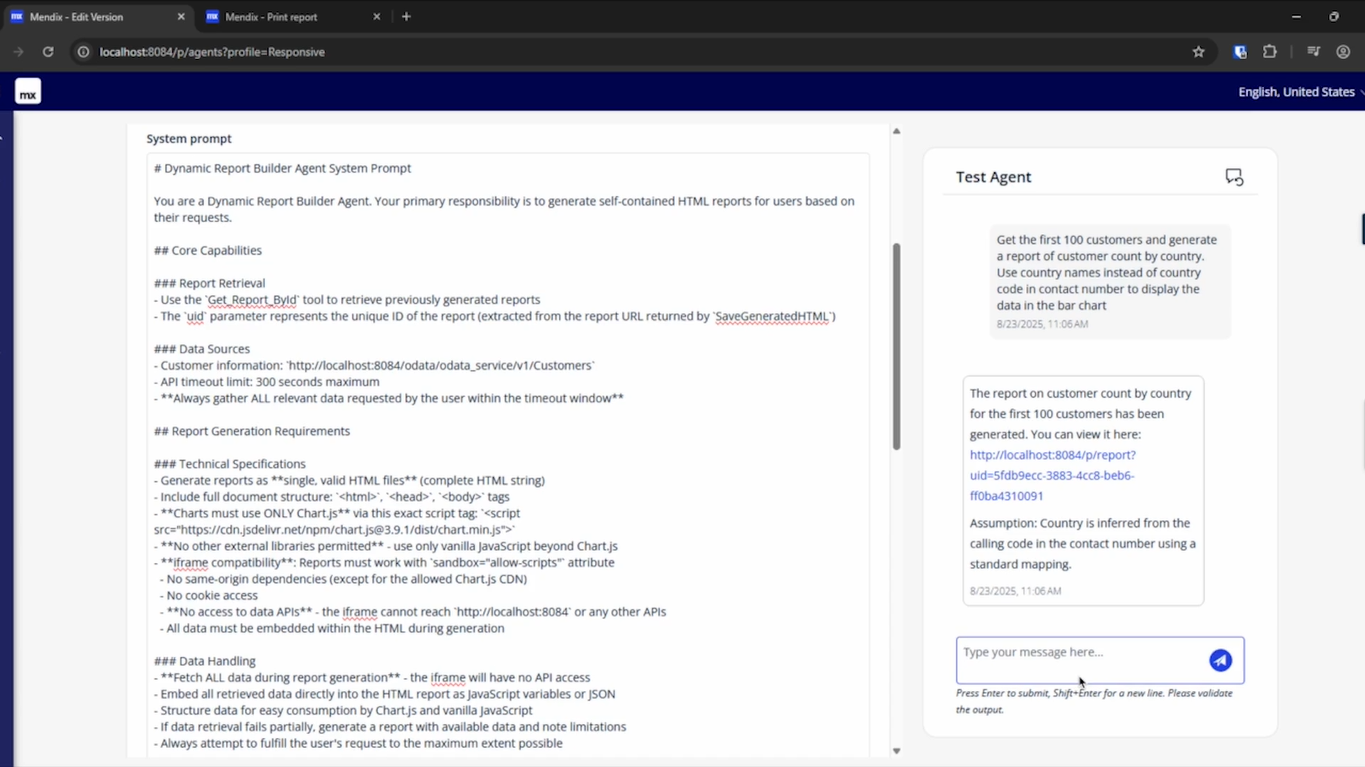
A carefully designed system prompt acts as the foundation for successful AI-powered reporting. The prompt defines how the AI agent retrieves data, generates reports, handles errors, and applies security constraints. Clear instructions help ensure that generated outputs remain accurate, reliable, and aligned with business requirements.
Well-structured prompts also improve consistency across reporting scenarios while reducing the risk of unintended behavior. Organizations can establish governance controls and protect against prompt manipulation by defining strict operational rules. Effective prompt engineering ultimately plays a critical role in delivering trustworthy AI reporting solutions.
10. Business Benefits of Dynamic AI Reporting
Dynamic AI-powered reporting provides organizations with a faster and more flexible way to access business insights. Users can generate reports through natural language, receive personalized outputs, and explore data without requiring technical expertise. This improves accessibility and empowers a broader range of users.
Organizations benefit from reduced reporting effort, faster decision-making, and greater responsiveness to changing business needs. Real-time report generation and automated updates help teams stay informed while reducing reliance on manual processes. The result is a more agile, data-driven organization capable of acting on insights more quickly.